 Shopping Cart
17 September 2026
A Smart Step Towards Sustainability with Water Tank Level Indicators
Water security looks different than it did even a couple of years ago. Rainfall patterns are becoming less predictable, water bills keep climbing, and more households, farms and businesses are choosing to manage their own water supply rather than rely solely on mains infrastructure.
A strong El Niño was declared for New Zealand in July 2026, with forecasters at Earth Sciences New Zealand (NIWA) expecting the pattern to peak around November to December 2026 before easing back to neutral by autumn 2027, bringing drier conditions to northern and eastern areas and stormier weather further south and west.
Against that backdrop, knowing exactly how much water sits in your tank, in real time, has gone from a nice-to-have to a genuine risk-management tool. This is where water tank level indicators come in. Originally covered in our August 2024 article on this topic, the technology has moved on considerably since then, with wireless, app-connected sensors now standard rather than niche. This is an update of that 2024 guide for the rest of 2026 as we head towards 2027, covering the sensor technology itself, the environmental and financial case for using it, and how residential, agricultural and commercial users are putting it to work.
Understanding Water Tank Level Indicators: The Technology Explained
A water tank level indicator is a device that measures how much water is sitting in a tank and reports that figure somewhere you can see it, whether that is a simple dial, a wall-mounted keypad, or a smartphone app. There are three main sensing technologies in common use, and each suits slightly different situations.
Float switches are the simplest and most established option. A float rises and falls with the water level and triggers a switch at set points, making this technology reliable, low-cost and easy to understand. It remains a sound choice for straightforward domestic tanks where basic full/empty signalling is enough.
Ultrasonic sensors measure the time it takes for a sound pulse to travel from the top of the tank down to the water surface and back. Because there is no contact with the water itself, ultrasonic sensors tend to hold up well over time and give a continuous, reasonably precise percentage reading rather than just a handful of trigger points.
Pressure transducers sit at (or near) the base of the tank and measure the pressure exerted by the water column above them, which correlates directly with depth. This approach is generally the most precise of the three and works well for taller tanks or installations where a very accurate reading matters, such as multi-tank agricultural or commercial setups.
What has actually changed since 2024
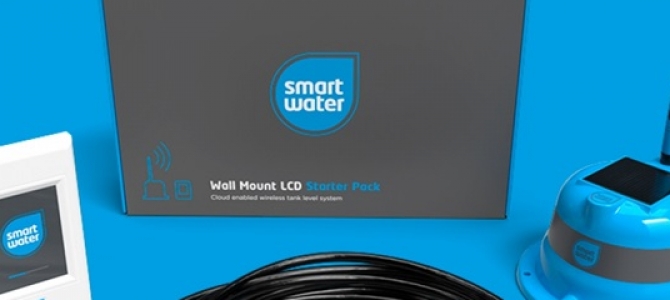
The sensing methods above are not new. What has changed is what happens to that reading once it is captured. Modern systems, including Smart Water's own SW900 series, pair the sensor with WiFi connectivity, so the same level data that once sat on a dial in a shed now reaches a phone, tablet or wall or desktop keypad wherever you are. That single shift, from a local reading to a remote, always-on one, is what has turned tank monitoring from a maintenance chore into genuine early-warning infrastructure. If you are still deciding whether the upgrade is worthwhile for your household, our breakdown of whether it's worth getting a water tank walks through the cost and payback side of that decision in more detail.
The Environmental and Financial Impact
The case for tank monitoring rests on two connected problems: water that goes to waste unnoticed, and the cost of finding out too late.
Water waste is largely invisible until someone is looking for it
In the United States, the Environmental Protection Agency's WaterSense programme estimates that the average household leak wastes close to 9,400 gallons of water a year, and that leaks nationwide account for roughly 900 billion gallons annually, broadly equivalent to the yearly water use of around 11 million homes.
Continuous monitoring is widely reported to reduce that waste substantially…
…though the exact figure depends heavily on the system, the site and what it is being compared against. Industry sources commonly cite reductions in unnecessary water waste of roughly 20 to 60 per cent when moving from an unmonitored baseline to continuous smart monitoring with leak alerts, largely because problems are caught in hours rather than weeks.
On the financial side, the numbers are easier to pin down
In the United States, the American Society of Civil Engineers' 2025 Infrastructure Report Card grades drinking water infrastructure at C-, and estimates around 240,000 water main breaks occur annually, costing approximately USD 2.6 billion in repairs, with roughly 33.3 trillion gallons lost through the distribution network each year. Locally, unplanned water loss shows up as emergency tanker deliveries, pump replacements after a tank runs dry and burns out a pump, and, in the worst cases, structural or ceiling damage from an undetected overflow. Early leak detection through continuous monitoring is one of the more reliable ways to avoid all three. For a closer look at how this plays out for businesses specifically, see our article on commercial water conservation and the role of tank level indicators.
Quick summary for busy readers: unmonitored tanks hide leaks and slow drops for days or weeks. Continuous monitoring surfaces the same problems within hours, which is where most of the water and cost savings actually come from.
Practical Applications: Who Benefits, and How
Domestic households
For a typical rainwater harvesting or backup-supply setup, a tank level indicator answers the two questions that matter most day to day: how much water is left, and is it dropping faster than it should be. That second question is what catches an internal pipe leak or a tap left running before it empties the tank. Keeping a tank in good working order also extends its usable life considerably; our guide to water tank maintenance and extending your tank's lifespan covers the routine checks that pair well with an installed sensor.
Agriculture and multi-tank rural properties
Farms often run several tanks for stock water, irrigation and household use, and a dry stock water tank discovered too late is a welfare issue, not just an inconvenience. Remote, multi-tank visibility from a single app is one of the most requested features from rural users, particularly heading into a season where NIWA's El Niño outlook points to drier conditions in parts of the country. We cover this in more depth in 5 reasons every farmer should invest in a water tank and in El Niño in 2026: why now is the time to track tank water and plan ahead.
Commercial sites
Facilities relying on stored water for process use, backup supply or rainwater harvesting face the same risk at a larger scale, with more connection points and higher throughput. Continuous monitoring turns water storage into an auditable, reportable asset rather than a blind spot, which increasingly matters for ESG and sustainability reporting as well as day-to-day operations.
Smart Tech and IoT Integration: Where the Industry Is Heading
The broader smart water management market reflects this shift in appetite. Fortune Business Insights valued the global smart water management market at approximately USD 17.53 billion in 2025, projecting growth to around USD 19.47 billion in 2026.
For everyday users, that momentum shows up as three practical features becoming standard rather than premium:
- Wireless, app-based monitoring: checking every tank on a property from a phone, without a site visit, is quickly becoming the baseline expectation rather than a bonus.
- Multi-tank and multi-site dashboards: useful for farms, property managers and hospitality operators managing several tanks or locations, as covered in our piece on effortless efficiency with remote monitoring of rainwater tanks.
- Automated pump control: linking tank level data directly to pump behaviour, so a pump does not run dry or cycle unnecessarily, reducing wear and the chance of a costly mid-season failure.
Conclusion and Next Steps
Water tank level indicators have gone from a helpful add-on to close to essential infrastructure for anyone relying on stored water, whether that is a household rainwater system, a working farm, or a commercial site. The core technologies (float, ultrasonic and pressure-based sensing) are well established, but it is the shift to wireless, app-connected monitoring that has made the real difference: problems that once went unnoticed for weeks are now visible within hours.
If you are ready to move from guesswork to real-time visibility, our starter packs built around the SW900 series are a practical place to begin, and our full product range covers wireless tank senders, pump controllers and app-connected monitoring for setups of any size.
Frequently Asked Questions
What is a water tank level indicator?
A water tank level indicator is a device that measures how much water is in a tank and displays or transmits that reading, typically using a float switch, an ultrasonic sensor, or a pressure transducer. Modern systems add wireless connectivity so the reading can be checked remotely via an app or keypad.
Which type of sensor is most accurate: float, ultrasonic, or pressure?
Pressure transducers are generally the most precise of the three, particularly for taller tanks, followed closely by ultrasonic sensors, which offer continuous readings without contacting the water. Float switches are the simplest and most cost-effective, but typically only signal a handful of set points rather than a precise percentage.
How much water can smart monitoring actually save?
This varies by site and system, so treat any single figure with some caution. Industry sources commonly cite reductions in unnecessary water waste in the range of roughly 20 to 60 per cent compared with an unmonitored baseline, largely from catching leaks and slow drops far sooner. I would recommend asking for evidence relevant to your specific setup rather than relying on a generic industry figure.
Is a water tank level indicator worth it for a small household setup?
For most rainwater harvesting or backup-supply households, yes, chiefly because it catches leaks and unexpectedly fast drops before a tank runs dry unexpectedly. Our article on whether it's worth getting a water tank sets out the cost and payback considerations in more detail.
How does a tank level indicator help farms and multi-tank properties?
It gives a single, remote view across every tank on a property, stock water, irrigation and household supply alike, so a developing shortage or leak is visible from a phone rather than discovered on a physical walk-round. This matters more heading into seasons with forecast dry spells, such as the El Niño conditions NIWA expects to affect parts of New Zealand through late 2026.
Post first published 23 August 2024 and last updated 17 September 2026