
 Shopping Cart
19 November 2026
El Niño Summer 2026/27: How to Protect Your Tank Water
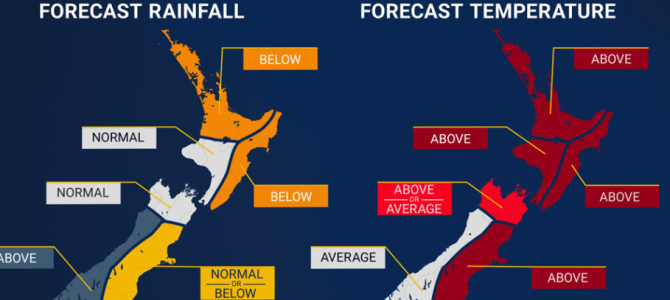
Earth Sciences New Zealand (formerly NIWA) released its seasonal climate outlook for November 2026 to January 2027 on 29 October, and the message for tank-reliant households in the north and east of the North Island is clear: plan for a warm, dry summer.
A very strong El Niño is now firmly established in the tropical Pacific. Forecasters expect it to peak over the coming months, and it is likely to rank among the strongest El Niño events on record. For the next three months, it is expected to be the main driver of New Zealand's weather.
If your home, lifestyle block or farm relies on rainwater, now is the time to understand what is coming and put a plan in place, before summer demand peaks and before your tank starts to run low.
What's Changed Since Last Summer?
Last summer (2025/26) was shaped by La Niña, which typically brings warm, humid air from the north-east and a higher risk of heavy rain for northern and eastern parts of the country.
This summer looks very different. El Niño is expected to bring:
- Westerly-quarter winds: alternating north-westerlies, westerlies and south-westerlies, with higher pressure to the north of New Zealand and lower pressure to the south.
- Fewer rain-bearing lows from the north: unsettled weather is expected mainly over the South Island, rather than the subtropical downpours that can top up tanks in the upper North Island.
- Drier ground in the north and east: less rain, lower soil moisture and reduced river flows.
- More variable, spiky temperatures: with hot spells most likely on the eastern sides of both islands.
The Summer Outlook by Region
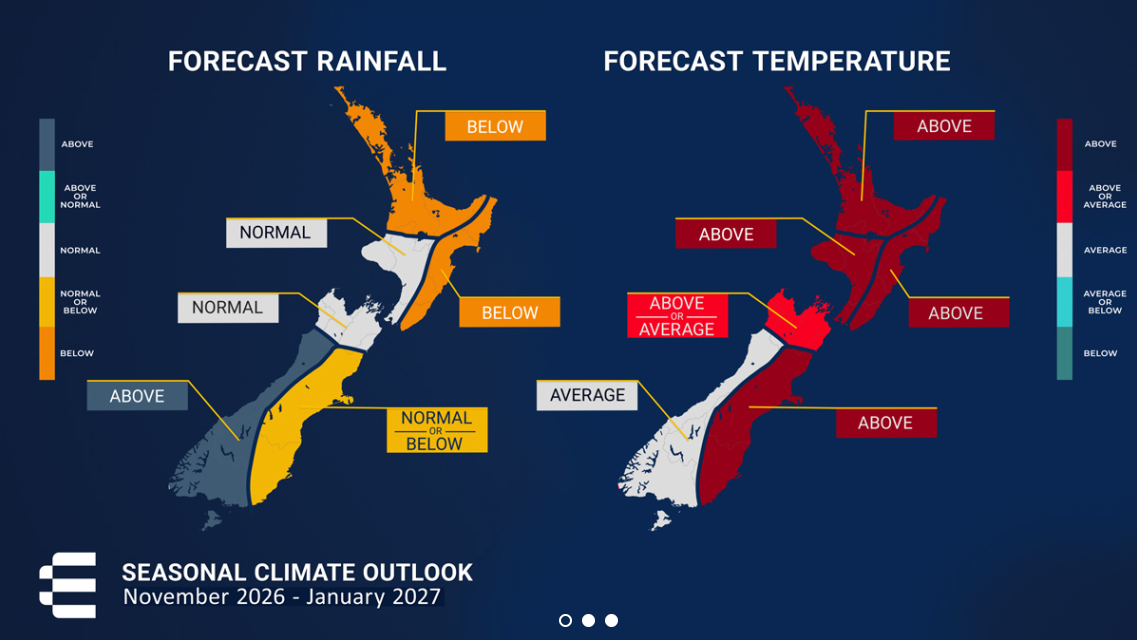
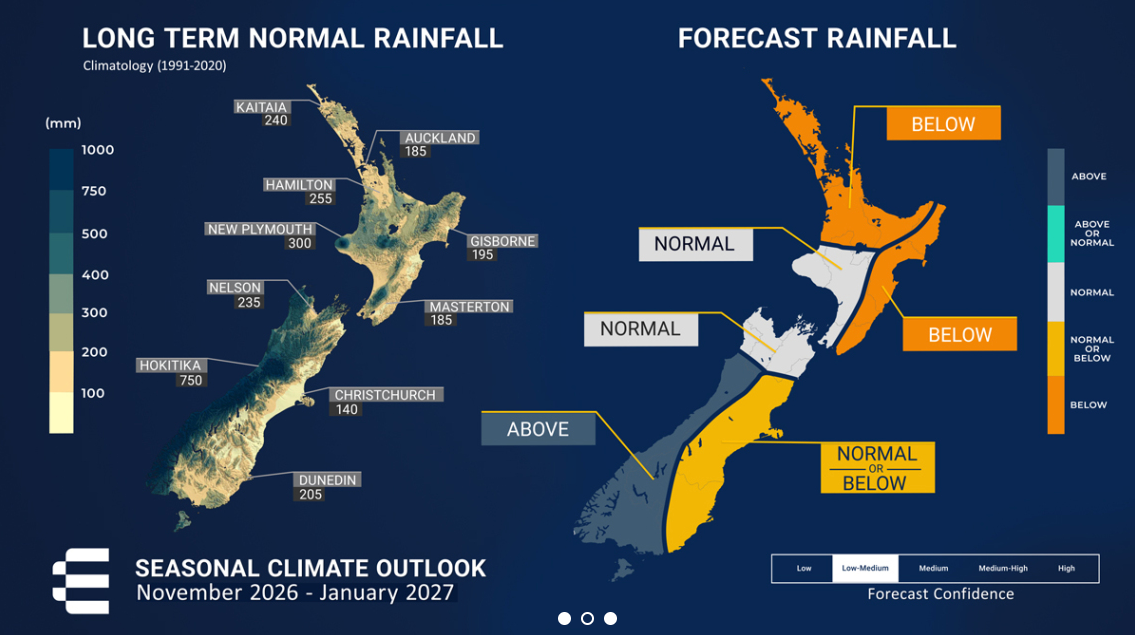
The figures below are from Earth Sciences New Zealand's November 2026 to January 2027 outlook. They are probabilities, not guarantees, so it is worth checking the monthly updates as the season progresses.
North of the North Island: Northland, Auckland, Waikato and Bay of Plenty
- Temperatures are most likely to be above average (50% chance).
- Rainfall, soil moisture and river flows are all most likely to be below normal (45% chance).
- More frequent dry spells and continued drying of soils and vegetation are expected.
East of the North Island: Gisborne, Hawke's Bay and Wairarapa
This region carries the strongest dry signal in the country.
- Rainfall is most likely to be below normal (55% chance).
- Soil moisture and river flows are most likely to be below normal (50% chance).
- Temperatures are most likely to be above average (50% chance), with hot spells expected to be more frequent and intense than usual.
West of the North Island: Taranaki, Whanganui, Manawatū and Wellington
- Temperatures are most likely to be above average (45% chance).
- Rainfall is most likely to be near normal, while soil moisture and river flows are equally likely to be near normal or below normal.
North and East of the South Island
- In Tasman, Nelson, Marlborough and Buller, temperatures and rainfall are most likely to be near normal, but soil moisture and river flows are equally likely to be near or below normal.
- In coastal Canterbury and east Otago, temperatures are most likely to be above average (45% chance). Strong westerlies may bring short, hot, dry föhn wind spells, which can dry out gardens and paddocks quickly and push up water use.
West and South of the South Island: West Coast, Southern Alps, Inland Otago and Southland
- Rainfall is most likely to be above normal (50% chance), with a higher risk of heavy rain from systems moving in off the Tasman Sea and Southern Ocean.
A Note on Heavy Rain and Cyclones
El Niño does not rule out a downpour. The summer outlook period also marks the start of the Southwest Pacific tropical cyclone season, and the risk for northern New Zealand is currently assessed as near normal. A dry season can still include the odd heavy rain event, so it pays to make sure your tank is ready to capture every drop when it does arrive.
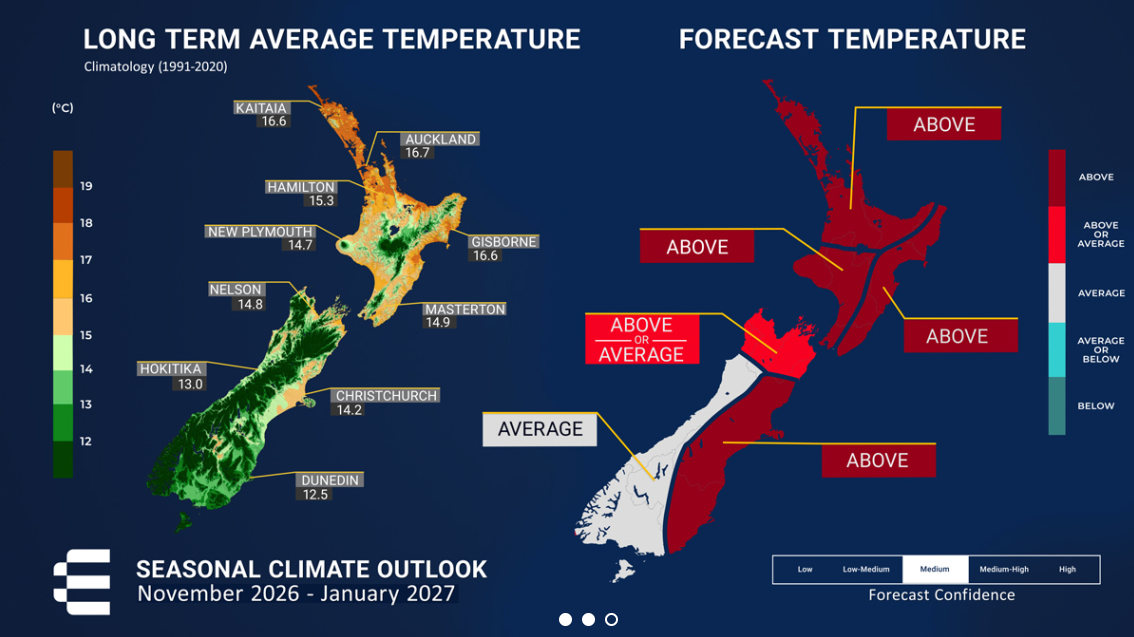
Latest Stats and Data
What This Means for Tank-Reliant Households
For homes and properties that rely on rainwater, an El Niño summer in the north and east typically means:
- Fewer top-ups: with less frequent rain, your tank refills less often between dry spells.
- Higher demand: hot weather means more showers, more garden watering, more washing and, on farms and lifestyle blocks, more water for stock.
- Less margin for error: a slow leak or a running toilet that would go unnoticed in a wet summer can quietly drain thousands of litres when there is no rain to replace it.
- Busier water carriers: when dry spells set in, demand for water deliveries tends to rise across a region at the same time. Leaving it until the tank is nearly empty can mean a stressful wait.
The good news is that most run-outs are avoidable. The key is knowing exactly how much water you have, how fast you are using it, and when something is not right.
How Smart Water Helps You Stay Ahead This Summer
Smart Water tank level indicators take the guesswork out of managing your water, giving you clear information you can act on long before your tank runs dry.
See Your Tank Level in Real Time
No more climbing ladders, tapping the side of the tank or lifting the lid. Check your water level at a glance on the in-home display or from your phone, wherever you are.
Track Your Daily Usage
Knowing your normal daily usage is the foundation of good water management in a dry summer. Track how much you use each day, see how quickly levels drop during a hot spell, and work out how many days of supply you have left at your current rate.
Spot Hidden Leaks Before They Drain Your Reserves
An unexpected drop in your tank level, particularly overnight when nobody is using water, is often the first sign of a leaking pipe, faulty float valve or burst trough line. Monitoring your levels closely lets you catch these problems early, before they cost you days of precious supply.
Order Water Deliveries Before the Rush
With a clear view of your levels and usage, you can decide on a sensible reorder point and book a delivery well ahead of time, rather than joining the queue when everyone else in your area is running low.
Protect Your Pump with Automated Cut-Offs
Running a pump dry can cause costly damage. Smart Water pump controllers can automatically switch your pump off when the water level falls to a set point, protecting your equipment and your remaining reserve. [link: Smart Water pump controllers]
Monitor Multiple Tanks Across Your Property
For lifestyle blocks and farms with several tanks, troughs and paddocks to manage, Smart Water lets you keep an eye on multiple tanks from one place, so you can spot problems quickly without driving around the property. [link: multi-tank monitoring]
Your El Niño Water Checklist
Use the weeks before the hottest part of summer to get prepared:
- Install or check your tank level indicator so you know exactly where you stand from day one.
- Set a baseline: note your typical daily usage now, so it is easy to spot when something changes.
- Clean gutters, downpipes, leaf guards and first-flush diverters so every rain shower that does arrive makes it into your tank.
- Inspect pipes, fittings, taps, troughs and float valves for leaks and drips.
- Agree a reorder level and save your local water carrier's details, so you can book a delivery in good time.
- Water gardens in the early morning or evening, mulch garden beds, and prioritise drinking and household needs over outdoor use when levels are low.
- Plan stock water on farms and lifestyle blocks, including backup supply for hot spells.
- Check the monthly outlook from Earth Sciences New Zealand, as forecasts can shift through the season.
West Coast and Southland: Planning for a Wetter Summer
If you live in the west or far south of the South Island, your summer is likely to look quite different. With above-normal rainfall favoured and a higher risk of heavy rain events, the priority shifts to keeping tanks, gutters and overflows in good working order. Real-time monitoring still helps here, letting you see how quickly your tank responds to heavy rain and confirm that your system is filling and overflowing as it should.
FAQ: Water Tanks and Smart Water Technology
What is Earth Sciences New Zealand (formerly NIWA), and why does its forecast matter?
Earth Sciences New Zealand was formed in July 2025 when NIWA merged with GNS Science. It is now New Zealand’s main source of science-based climate and weather forecasts. Each month it publishes a seasonal climate outlook covering the next three months. These outlooks help households, farmers and businesses plan for likely changes in rainfall, temperature and soil moisture. For tank-reliant properties, they are a useful early warning of when water could get tight.
How does a smart water tank system work?
A sensor in or on your tank measures the water level and sends it to an in-home display or the Smart Water app. You can check your level from anywhere and track how much water you use each day. An unusual drop in level, especially overnight, can point to a leak. With a compatible pump controller, the system can switch your pump off automatically when the water falls to a set level, so the pump doesn’t run dry.
Who benefits most from a water tank with smart technology?
Anyone who relies on rainwater benefits, especially in areas facing a dry summer. The 2026/27 outlook points to below-normal rainfall in Northland, Auckland, Waikato and the Bay of Plenty. The driest signal is for Gisborne, Hawke’s Bay and Wairarapa. Rural homes, lifestyle blocks and farms with several tanks gain the most, because running out of water there means costly deliveries, stressed stock or a damaged pump.
Can smart water tank systems save me money?
For most tank-reliant households, the savings come from avoiding problems rather than from a lower water bill. Spotting a leak early stops thousands of litres being wasted. Knowing your usage helps you avoid urgent water deliveries. An automatic pump cut-off helps prevent expensive damage from a pump running dry. If your property is also on town supply, using tank water well can reduce how much mains water you buy. How much you save will depend on your property and how you use water.
Are there environmental benefits to using a smart water tank?
Yes. Knowing exactly how much water you have and how fast you’re using it makes it easier to cut waste and fix leaks quickly. That means collected rainwater goes further. In a dry El Niño summer, using water carefully also eases pressure on local supplies and on water carriers when demand is high.
How do smart water tank systems help during dry spells and water restrictions?
Real-time levels and usage data show you how many days of supply you have left at your current rate. You can then cut back on outdoor use early, book a delivery before your area gets busy, and keep enough water for drinking and household needs. If your home is on town supply with a tank as backup, the same data helps you stay within any council restrictions while still using your stored rainwater.
Will El Niño cause a drought in New Zealand this summer?
Earth Sciences New Zealand has not forecast a drought. Its November 2026 to January 2027 outlook does favour below-normal rainfall, more frequent dry spells and drier soils across the north and east of the North Island. Outlooks are probabilities, so it is worth checking each monthly update and preparing your water supply early.
How do I know if my tank is leaking?
Watch your tank level when nobody is using water, such as overnight. If the level keeps dropping with no rain and no use, you may have a leak in a pipe, fitting, float valve or trough line. A tank level indicator makes this much easier to spot than checking the tank by hand.
Get Prepared Now
A very strong El Niño is a reminder that water security starts with good information. Whether you are on a lifestyle block in Northland, a farm in Hawke's Bay or a rural home in Wairarapa, knowing your tank level, your daily usage and the early warning signs of a leak puts you in control, however dry the summer turns out to be.
Explore our range of tank level indicators, wireless tank senders and pump controllers, or get in touch with our New Zealand team for advice on the right setup for your property.